
.png)
By julia_music
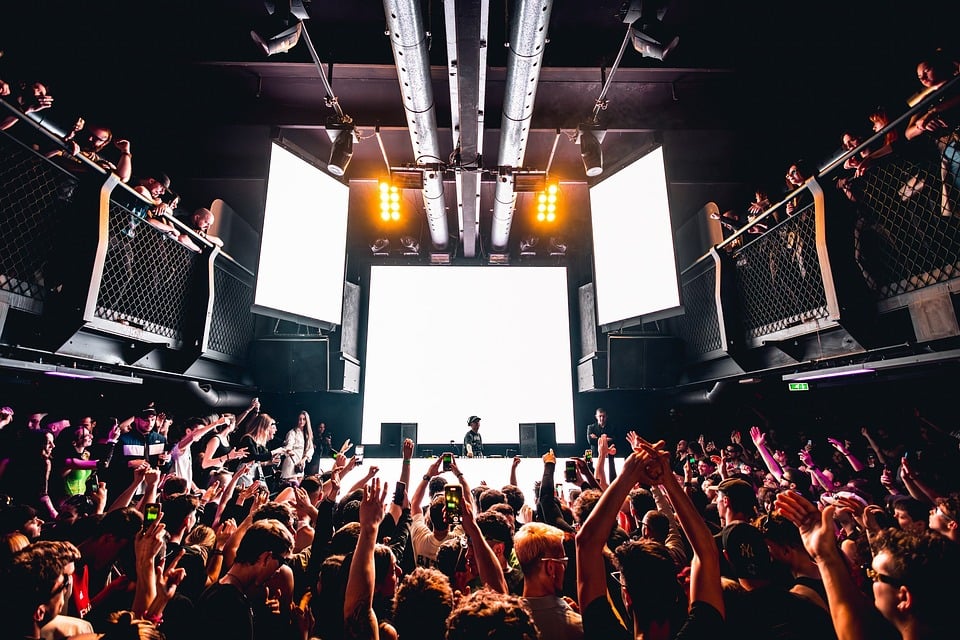
A full dance floor can look effortless from the outside. Lights flashing, people moving, the DJ stands there, vibing, almost casual, as if the room simply decided to catch fire on its own.
But that’s rarely what’s happening.
Keeping a dance floor alive is less about playing “good songs” and more about reading energy in real time. It’s part taste, part timing, part restraint. And maybe most importantly, it is about understanding that a crowd is not a machine. It breathes. It hesitates. It surges. It gets tired. It surprises you.
A DJ’s job is not just to start that movement. It’s to keep it alive.
It starts with attention, not ego
One of the easiest mistakes a DJ can make is assuming the room should follow their plan.
Sometimes that works. Often, it doesn’t.
A dance floor is a conversation, and good DJs listen as much as they speak. They pay attention to what kind of movement is happening, not just how much. Are people jumping, swaying, singing, pacing themselves? Are they leaning into rhythm, or waiting for something more familiar to hold onto? Those details matter.
The strongest DJs are rarely the ones proving how much they know. They are the ones noticing what the room needs next, and adapting in real time, not just pressing next and trying flashy mixes.
That can be humbling. You may love a track. You may have waited all week to play it. And still, the floor may need a simpler beat, a longer groove, or a moment to breathe.
That is not failure. That is art.
Watching other people’s live sets will give you ideas and inspiration. Boiler Room is a great source of live DJ essentials:
Energy is built in waves, not in a straight line
A common misunderstanding about DJing is that the goal is to keep energy at maximum all night.
It’s not.
If everything hits hard, nothing hits hard.
The dance floor needs contrast. Tension and release. Familiarity and surprise. A set that stays at one intensity for too long starts to feel flat, even if the tracks are objectively strong. People stop feeling carried and start feeling pushed.
This is why experienced DJs think in arcs. They know when to let a groove sit. When to raise the pressure. When to pull back just enough to make the next moment land harder.
You can hear this in great sets. A section locks in. The crowd settles into it. Then something shifts, a new percussion line, a bass change, a vocal entrance. Not too soon. Not too late.
The room wakes up again.
Keeping the floor alive is not about constant acceleration. It is about pacing desire.
Track selection matters, but timing matters more
People often ask whether a great DJ simply has better music.
Of course music matters. But selection alone is not the full story. A brilliant track played at the wrong moment can fall flat. A simpler track played at exactly the right time can transform a room.
Timing is where instinct becomes visible.
There is a moment in every set when a crowd is ready for something bigger than what is currently playing—but not yet ready for the biggest record of the night. Push too early, and the set peaks before the room is ready. Wait too long, and momentum leaks out.
This is why patience matters. A DJ isn’t only choosing songs. They’re choosing when a room can receive them.
The same track can feel average at 11:15 and unforgettable at 12:40. The right song is only “right” when the moment is ready for it.
And that’s not magic. It’s song placement, and it’s something that requires trial and error until you find what clicks in a live set.
Familiarity is a tool, not a crutch
There is always a tension between giving people what they know and giving them something new.
Lean too far into familiarity, and the night becomes predictable. Lean too far into obscurity, and the crowd disconnects. The sweet spot is usually somewhere in between: enough recognition to create trust, enough freshness to keep people curious.
A smart DJ understands that familiarity works best when it is earned.
Sometimes that means teasing a known vocal over a less familiar groove. Sometimes it means holding back the obvious anthem until the room truly wants it. Sometimes it means never playing the expected version at all.
The goal is not to show off how underground your taste is. Nor is it to reduce the night to a jukebox of guaranteed reactions. The goal is movement with meaning.
People want to feel both safe and surprised. But keeping that balance is harder than it sounds. In the end, we have to keep in mind that recognition can pull people in, but surprise is what keeps them engaged.
Transitions carry more emotional weight than people realize
Most listeners don’t think consciously about transitions. They just feel them.
A rough transition can knock the air out of a floor. A great one can make two separate tracks feel like one evolving idea. That continuity matters because dancing depends on trust. The body wants to believe the next moment will make sense.
When transitions are thoughtful, the room stays inside the story.
That doesn’t always mean long, polished blends. Sometimes the best move is sharp and decisive. Sometimes it is messy on purpose. What matters is whether the change feels intentional.
A DJ who can transition well protects momentum. They reduce friction. They help the crowd stay surrendered to the night rather than snapping back into self-consciousness.
And that self-consciousness is often what empties a floor first.
Reading the room is physical, not abstract
“Read the crowd” is common advice, but it can sound vague until you know what to look for.
Start with simple things. Are people facing the booth or facing each other? Are they moving in bursts or staying steady? Are they leaving for drinks at the same time? Are new people joining the floor, or are only the committed dancers left?
These small signs tell the truth faster than applause does.
A room can be loud and still be drifting. A room can be relatively quiet and completely locked in.
Good DJs watch for friction points: the moment feet slow down, the moment phones come out, the moment conversations begin to overpower movement. That does not mean panicking at every dip. It means noticing patterns before they become problems.
There is also a quieter layer to crowd reading: emotional tone. Some nights want joy. Some want grit. Some want release. Some want elegance. The same BPM can feel entirely different depending on the emotional texture beneath it.
You can’t force the wrong mood onto a room for very long and reading the room means watching behavior, not guessing from your own preferences.
Dead space is real
One thing great DJs respect is the fragility of momentum.
A dance floor can survive a mediocre track. It often cannot survive confusion.
Long gaps in energy, awkward mic use, sudden style changes with no bridge, or overly self-indulgent detours can all create dead space, the feeling that the spell has broken. Once people drift into analysis, they stop dancing and start evaluating. Should we get another drink? Go outside? Check another room?
That is the danger.
The floor does not always die dramatically. Sometimes it just thins out one casual decision at a time.
This is why consistency matters. Not sameness, consistency. The crowd needs to feel held. They need to trust that even when the music shifts, the night still knows where it is going.
Dance floors rarely collapse from one bad moment. They fade slowly when people disconnect from them.
A DJ also manages stamina
Not every problem on a dance floor is musical.
People get tired. The room gets hot. Attention shifts. Alcohol changes behavior. Early crowds need invitation; late crowds need control. A DJ who ignores those realities may misread what is happening.
Sometimes keeping the dance floor alive means easing off just enough to let people recover without leaving. Sometimes it means choosing grooves that feel physical without being punishing. Sometimes it means recognizing that a crowd at 1 a.m. is different from a crowd at 3 a.m., even if the room is fuller later.
This is where maturity shows.
A good set is not just exciting. It is sustainable.
There is a practical wisdom in that. The best nights are rarely the ones that burn too bright too soon. They are the ones that seem to deepen as they go.
Confidence helps, but control helps more
DJs make mistakes. A mix clashes. A track choice misses. A cue comes in late. What keeps the floor alive is not flawless execution but composure. Panic spreads. Confidence settles.
The best DJs don’t dramatize errors. They adjust. They reroute. They keep the room focused forward.
That kind of control is subtle. It comes from preparation, yes, but also from perspective. A crowd usually wants to keep having a good time. They are not there to grade every decision. They are there to feel something together.
A DJ who remembers that can stay loose enough to make better choices.
At the heart of it, keeping a dance floor alive is an act of care.
Not sentimental care. Practical care. Rhythmic care. Emotional care.
The DJ holds the arc of the room for a while. They sense when people want to be challenged and when they want to be reassured. They understand that dancing is physical, social, and strangely vulnerable. For many people, it takes a little courage to really let go in public.
Good DJs protect that courage.
They make choices that help people stay inside the moment a little longer. Not by controlling the room completely, but by guiding it with enough intelligence and sensitivity that the crowd can stop thinking and keep moving.
That is why the best sets feel alive. Not because they are loud or technically dense or full of big drops, but because they create trust between the booth and the floor.
And once that trust is there, the room does something beautiful.
It moves as one thing.Then many things.Then one thing again.
Conclusion
A dance floor stays alive when a DJ understands that energy is not something you impose. It is something you shape, protect, and respond to.
That means reading the room honestly. Pacing the set with care. Using tension wisely. Respecting transitions. Managing stamina. Letting go of ego. Knowing when to push, and when to wait.
In the end, people may remember a certain track, a certain drop, a certain moment when the whole room shouted at once. But beneath those memories is something quieter: the feeling that the night knew how to hold them.
That is the work.
And when it is done well, it does not just keep people dancing.
It keeps them present.


No comments:
Post a Comment